
-
The Southern Wall of the Har Habayis, part 6
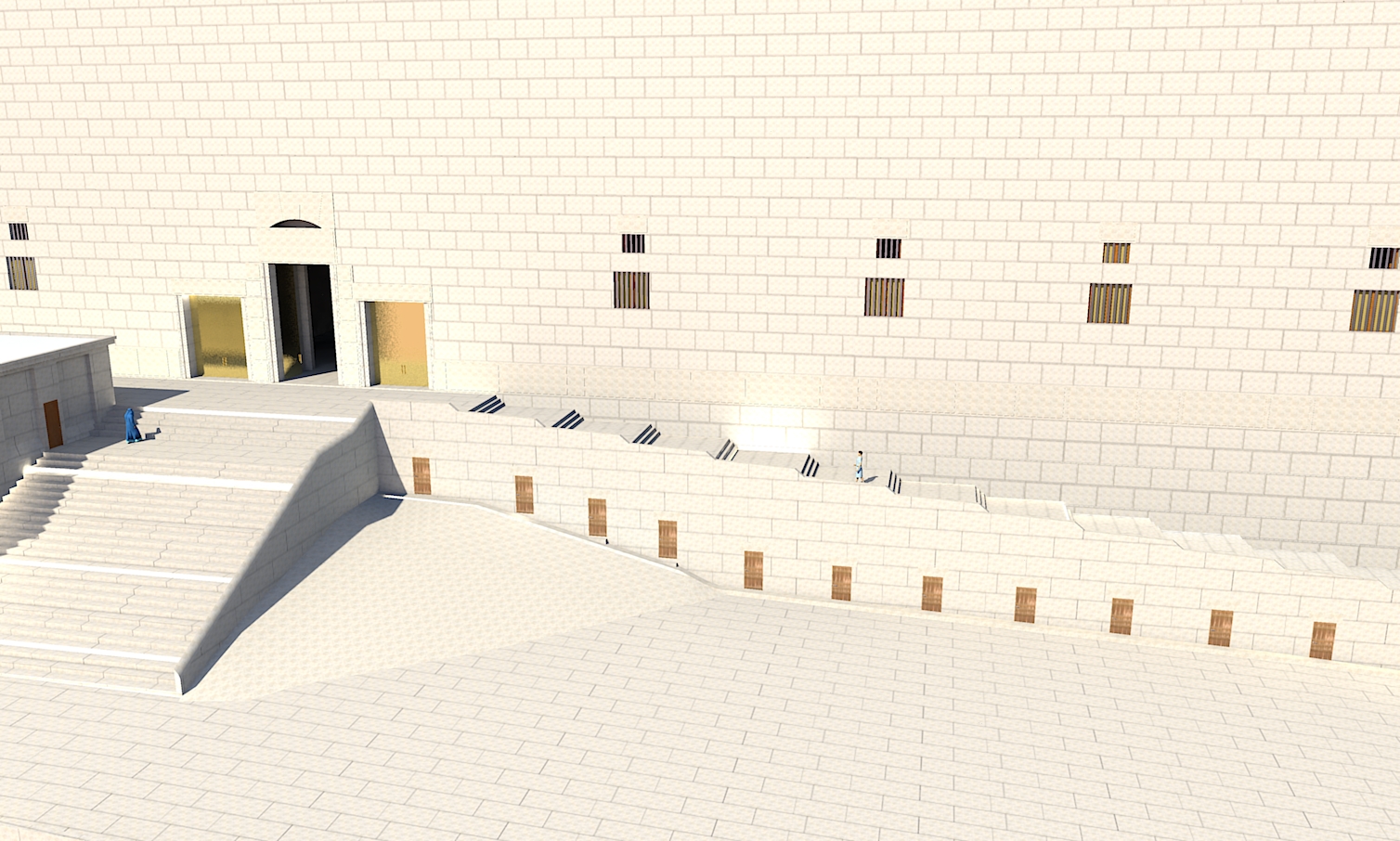
As mentioned in a previous post, running along the southern wall was a stepped walkway, 6.4 m (21 ft) wide. This walkway was built on top of rooms with vaulted roofs; these rooms most probably were stores. When the Romans destroyed Yerushalayim, they filled these stores up with wood and lit them on fire. (The…
-

The Southern Wall of the Har Habayis, part 5
65.6 meters (215 feet) to the east of the double gate is the triple gate (sometimes called the eastern Chuldah gate). It is 15.5 meter (51 feet) wide; and is made up of three 4-meter (13-feet) wide arched doors, separated by two 1.8-meter (6-feet) wide piers. The lowest stone of the western gate jamb, which…
-
The Southern Wall of the Har Habayis, part 4
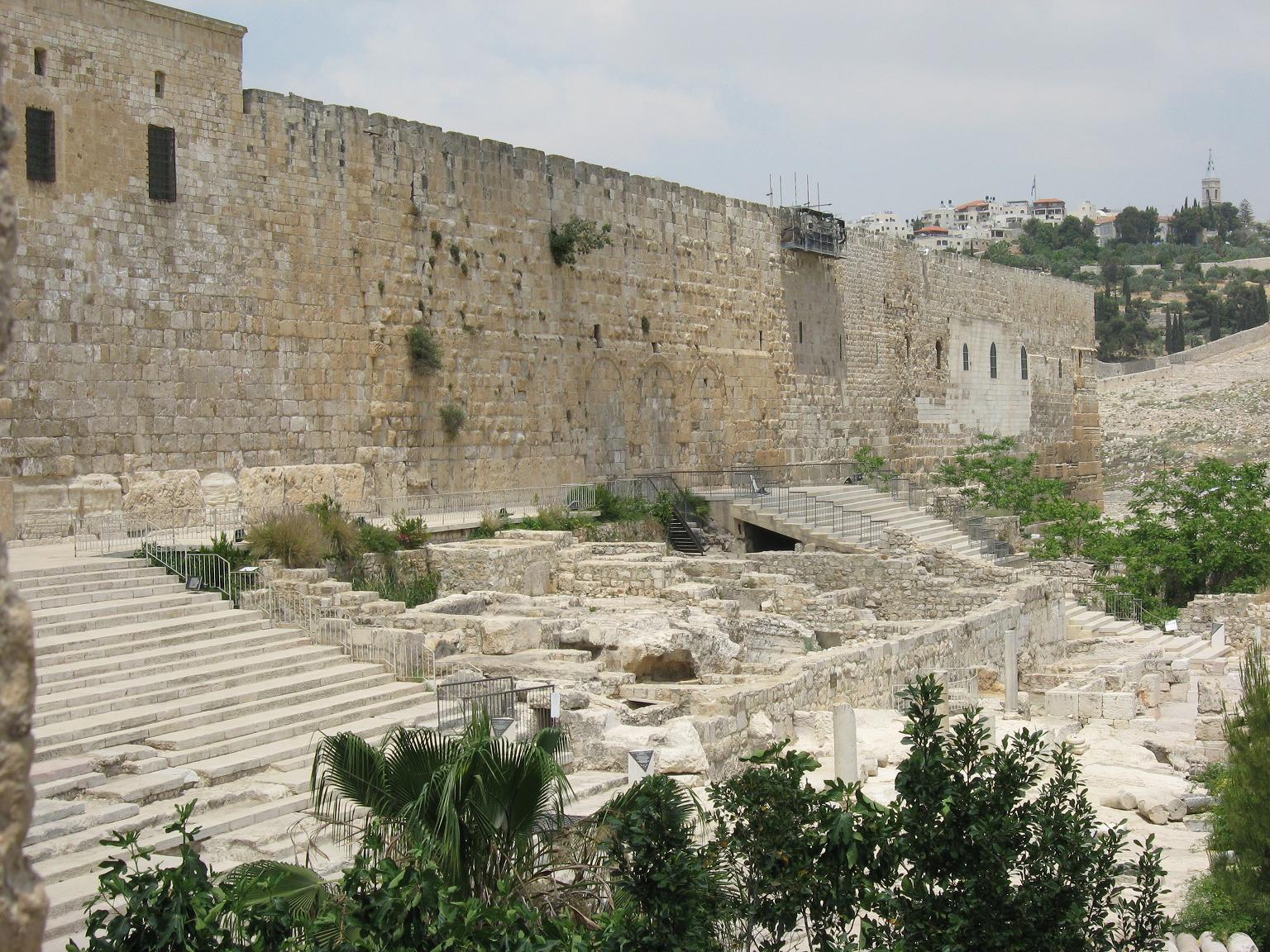
In front of the Double gate was a wide flight of steps, leading up from the plaza in front of it. The stairway had thirty steps, some built of stone, and some cut into the bedrock. The width of the excavated part of the stairway is 32 m (105 ft), although, based on a…
-
The Southern Wall of the Har Habayis, part 3
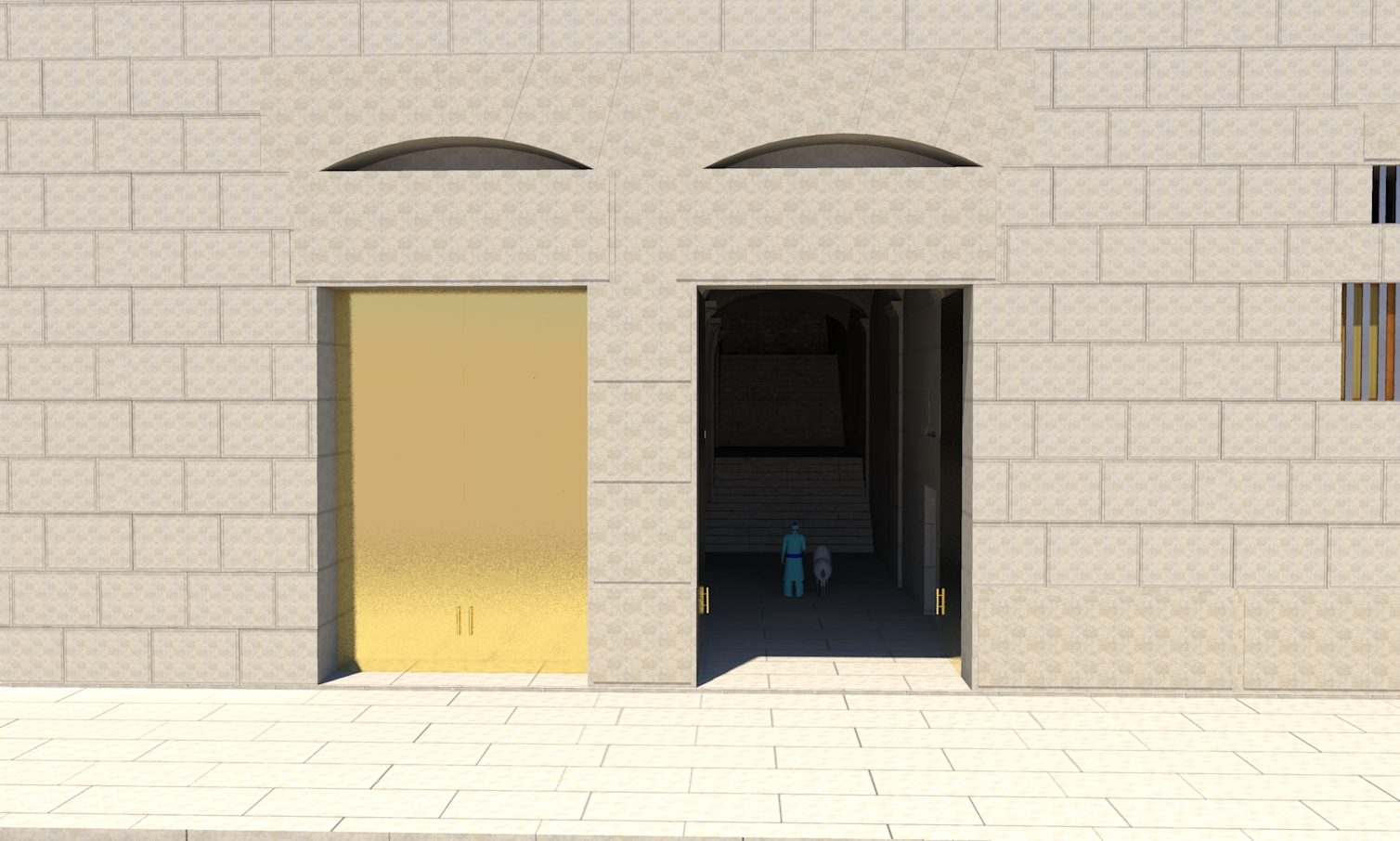
101 m (331 ft) east of the western edge of the southern wall is a double gate, almost the whole gate is still standing, besides for part of the easternmost doorpost. In front of this gate a tower was built during the crusader era, which covers up the western gate, and most of…
-

The Southern Wall of Har Habayis, part 2
Running along the southern wall was a stepped walkway, 6.4 m (21 ft) wide, with stores built under it. In front of this was a large plaza, with steps leading to the two gates in this wall. This walkway started 11.2 m (37 ft) away from the western corner, where two flights…
-
The Southern Wall of Har Habayis, part 1
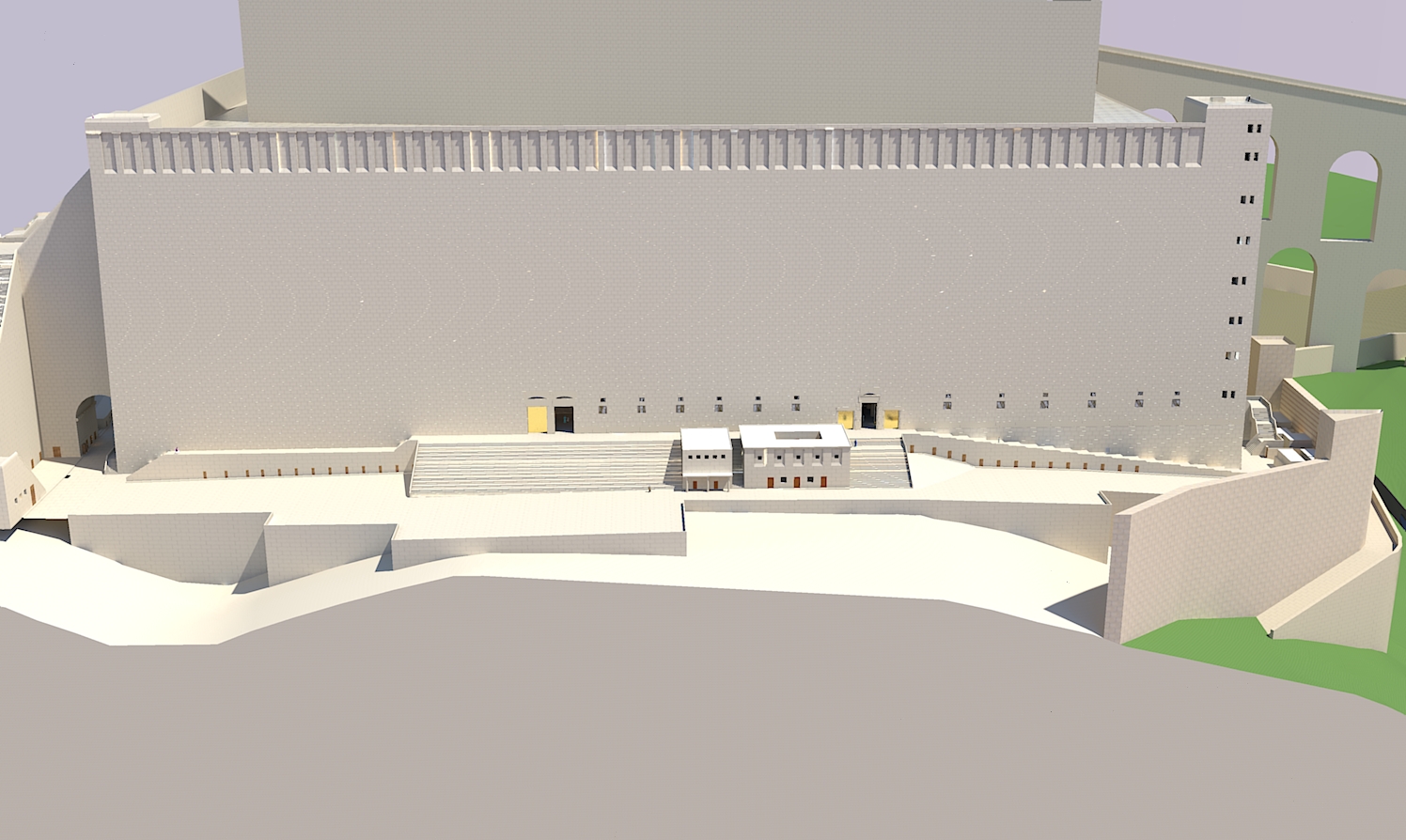
The southern wall of Hurdus’s expansion of Har Habayis, is 281 m (922 ft) long. This wall is approximately at a ninety-degree angle to the Western Wall. This wall is entirely from Hurdus’s time, as can be seen from the style of the stones. This wall extends from Nachal Kidron in the east, to the…
-

The Western Wall of the Har Habayis, part 9 (The Trumpeting Place)
By the southwest corner of the Har Habayis, next to the gate above Robinson’s arch, were chambers. On the roof of these chambers, a Kohen used to blow a trumpet every Friday, to signal that Shabbos is coming. During Binyamin Mazar’s excavations, a stone was found, that mentioned this “Beis Hatekiah”-place of trumpeting.…
-
The Western Wall of Har Habayis, part 8 (The drains)
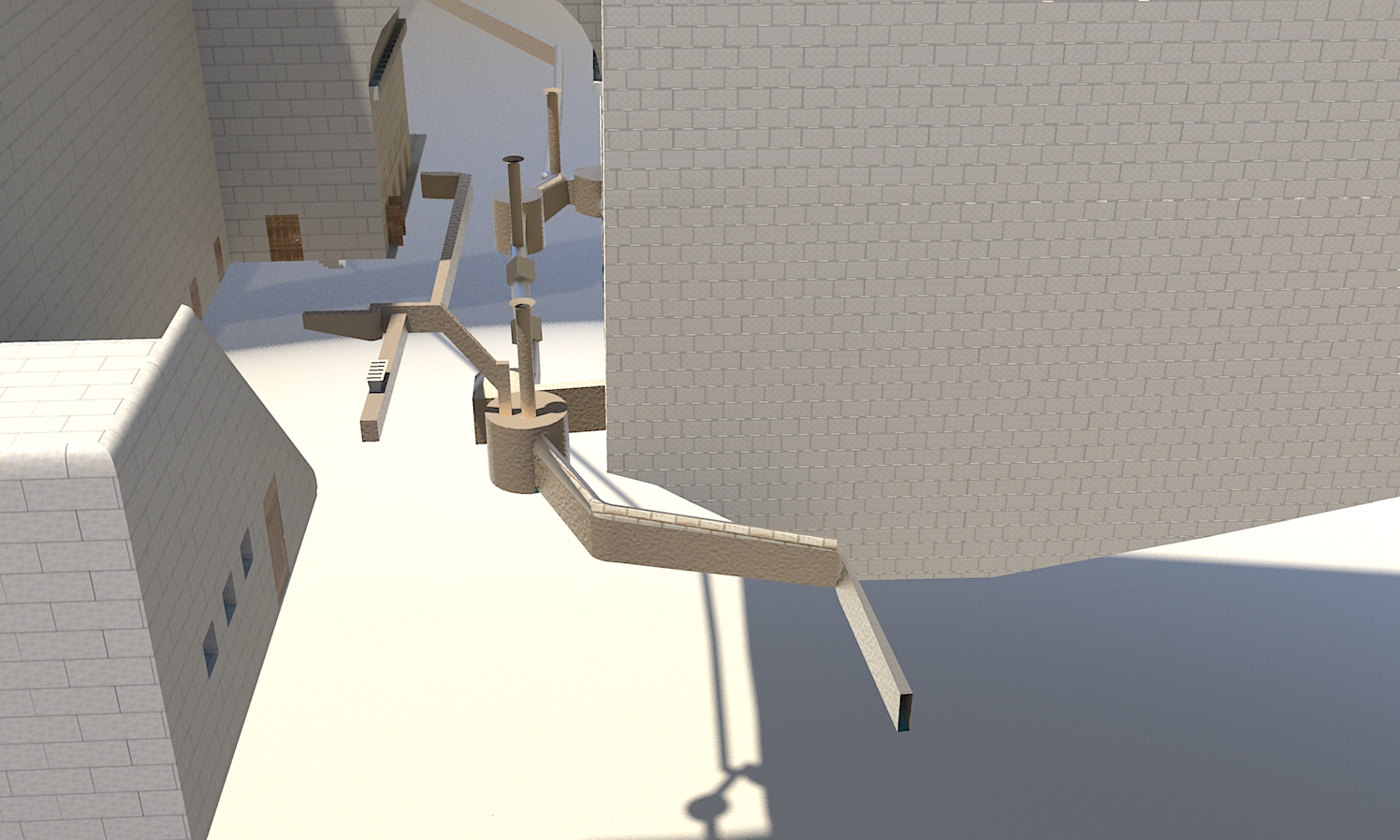
Running under the main street of Yerushalayim was a large drainage channel, partly cut into the rock. This channel went from the north of the city to the south, passing on the west of the Shiloach pool and exiting the city there. This drain was originally built at some point before Hurdus’s time and was…
-

The Monumental Building by Wilson’s arch (Masonic Hall), part 2
In the previous post, I wrote about the monumental dining hall built during the Second Mikdash era. However, this building underwent significant changes at some point before the Churban The first change that was done to the building was the removal of the flat roof of the hall. The building was then…
-

The Monumental Building by Wilson’s arch (Masonic Hall), part 1
Around the same time as the thick wall (see previous post) was built, a monumental hall was built next to it, located around 25 m (82 ft) to the west of Har Habayis. (Based on the fact that the thick wall blocks the northern facade of the hall, some say that the hall was built…
Hashem said to Yechezkel, “Its reading in the Torah is as great as its building. Go and say it to them, and they will occupy themselves to read the form of it in the Torah. And in reward for its reading, that they occupy themselves to read about it, I count it for them as if they were occupied with the building of it.
(Tanchuma Tzav 14)